
The landscape of commercial fire safety has undergone a significant transformation. In 2026, the priority for business owners, facility managers, and landlords has shifted from merely "having a system" to "having an intelligent system that doesn't disrupt the bottom line." Traditional wired fire alarm installations often present a logistical nightmare for active environments: days of drilling, the unsightly presence of plastic trunking, and the inevitable mess of cable runs through ceiling voids.
For busy offices and high-end shared showrooms, the cost of downtime frequently exceeds the cost of the hardware itself. This is where wireless fire alarm technology has established itself as the premier solution. By leveraging advanced radio frequency protocols, these systems offer a level of reliability that matches or exceeds traditional wired alternatives, while maintaining the aesthetic integrity of modern workspaces.
The Evolution of Commercial Fire Detection
Historically, wireless systems were viewed with skepticism due to concerns regarding battery life and signal stability. However, the introduction of rigorous European standards, such as EN54-25, and the refinement of the BS 5839-1:2025 guidelines have paved the way for wide-scale commercial adoption. Modern systems utilize sophisticated mesh networking and dual-frequency communication to ensure that a signal always finds its path to the control panel, even in complex architectural environments.
At GRB Compliance Services, the preference for wireless technology in commercial settings is driven by technical performance and client convenience. Systems are now capable of protecting vast areas: ranging from multi-storey office blocks to sprawling industrial showrooms: without a single meter of fire-rated cable connecting the sensors to the hub.
Why Wireless? The Commercial Imperative
The decision to opt for a wireless solution over a hardwired one is usually driven by three primary factors: speed of deployment, aesthetic preservation, and operational continuity.
1. Minimal Business Disruption
A traditional fire alarm installation in a mid-sized office can take five to seven working days, involving technicians moving through every room, drilling into walls, and lifting floorboards. For a shared showroom or a professional services firm, this disruption is unacceptable. Wireless systems reduce installation time by approximately 60% to 70%. Most components are surface-mounted with minimal fixings, allowing a full system to be commissioned in a fraction of the time.
2. Elimination of Mess and Structural Modification
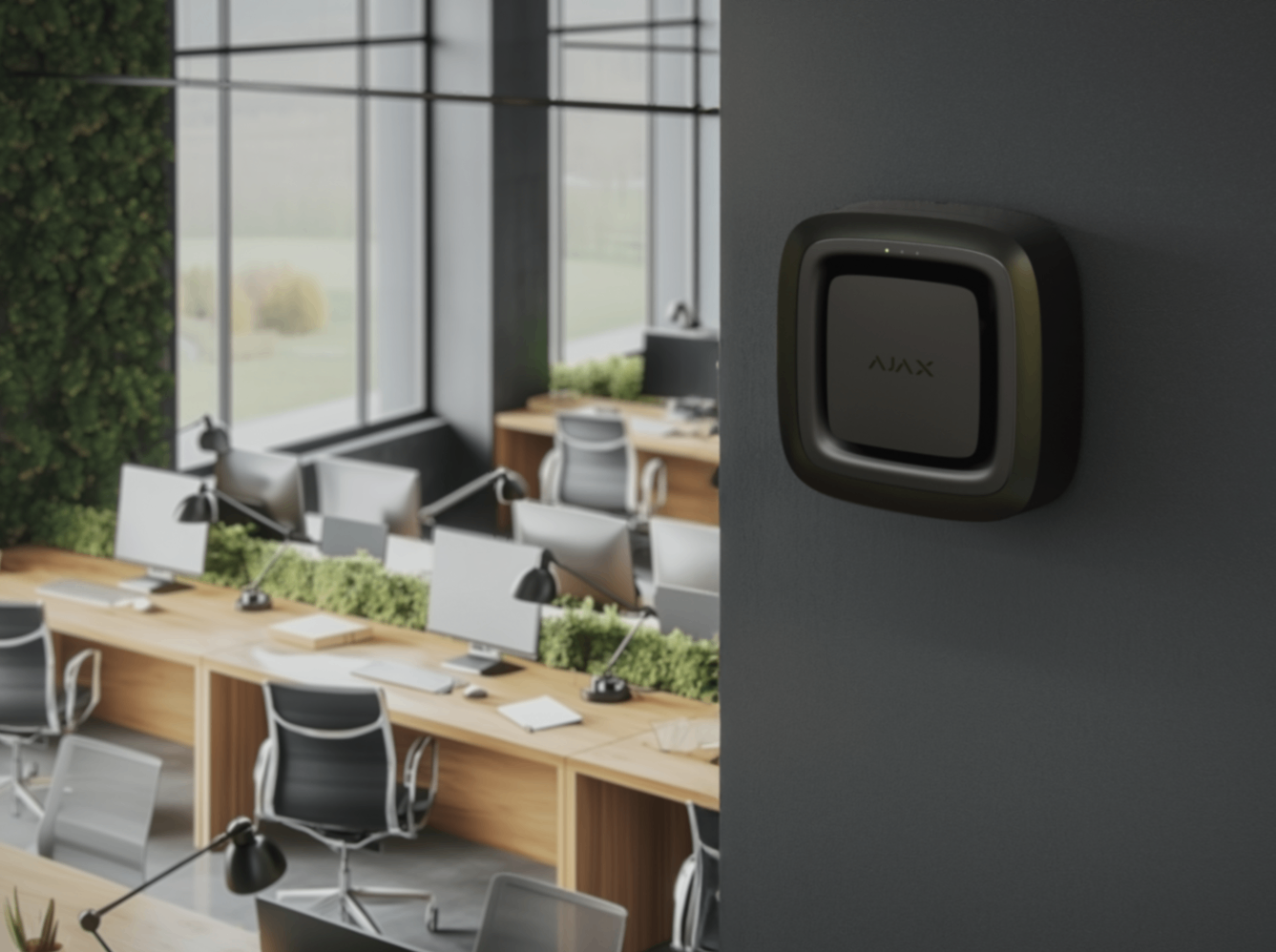
Wired systems require extensive cable runs, often necessitating the use of conduit or trunking if cables cannot be hidden. This not only creates a "messy" appearance but can also interfere with the structural integrity of heritage buildings or the sleek design of modern glass-fronted offices. Wireless devices, such as those from Ajax, are designed with contemporary aesthetics in mind, ensuring they blend seamlessly into the environment.
3. Future-Proof Scalability
Commercial spaces are rarely static. Partition walls are moved, new showrooms are added, and office layouts are reconfigured. In a wired setup, moving a single detector involves chasing cables and rewiring back to the last junction box. With a wireless system, detectors can be relocated in minutes and re-enrolled into the system via software.
Ajax Systems: The Gold Standard for 2026 Infrastructure
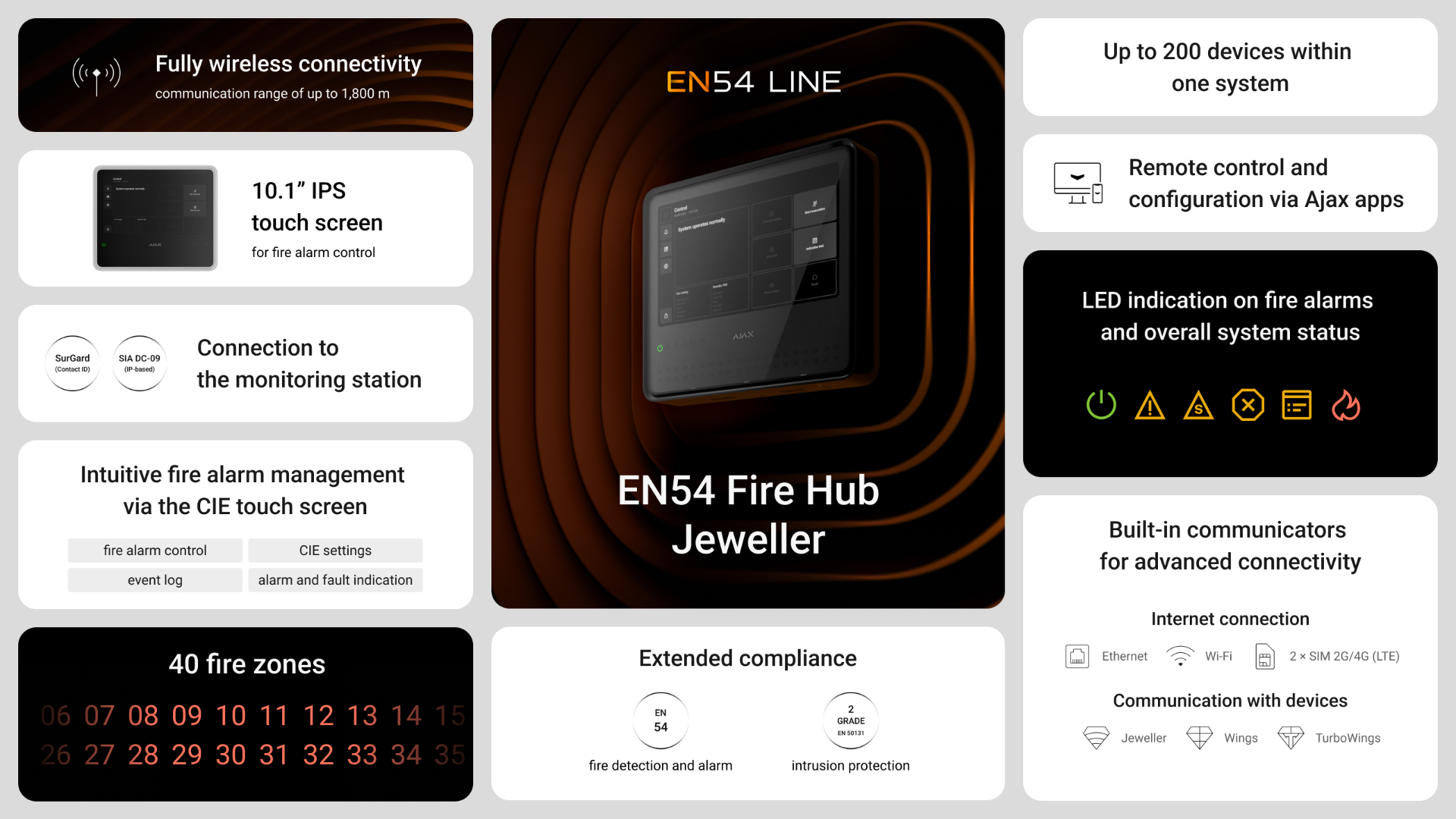
As an Ajax Authorised Installer, GRB Compliance Services prioritizes hardware that offers both technical superiority and user-centric features. Ajax has redefined the wireless fire safety category with their FireProtect 2 series.
- Jeweller Radio Technology: This proprietary protocol allows for communication over distances up to 1,800 meters in open space. It features "always-on" monitoring, where the hub polls each device at intervals as short as 12 seconds to ensure everything is functioning correctly.
- Dual-Spectrum Sensors: To minimize false alarms: a significant pain point for busy offices: Ajax uses a bi-optical sensor that can distinguish between real smoke and non-threatening steam or dust. This is critical for shared showrooms where environmental factors can vary.
- HazeCloud Integration: Facility managers can monitor the status of their entire fire safety suite from a smartphone or desktop app. Whether you are on-site or working remotely, you receive instant notifications regarding alarm triggers, low battery warnings, or device tampering.
Navigating BS 5839-1:2025 Compliance
Compliance is non-negotiable. In the UK, the BS 5839-1:2025 explained standards dictate the design, installation, commissioning, and maintenance of fire detection systems in non-domestic premises. A common misconception is that wireless systems are less "compliant" than wired ones. In reality, as long as the system meets EN54-25 (the standard for components using radio links), it is fully recognized by insurers and fire authorities.
Professional installation is the key to maintaining this compliance. GRB Compliance Services ensures that every wireless system undergoes a comprehensive radio signal strength test before a single device is fixed. This guarantees that the communication link is robust enough to withstand interference from other office electronics, such as Wi-Fi routers and heavy machinery.
Cost-Effective Protection and Maintenance
While the hardware cost of wireless components may be higher than their wired counterparts, the total cost of ownership is often lower. The savings on labor, materials (cabling and trunking), and the lack of needed remedial decorating after the job is finished make it a financially astute choice.
Furthermore, maintenance is streamlined. GRB Compliance Services offers comprehensive fire alarm maintenance starting from just £220 per year. This package includes:
- Two scheduled site visits per year to ensure ongoing reliability.
- Full compliance with BS 5839-1:2025.
- Testing of all wireless signal strengths and battery levels.
- Documentation and logging required for your Fire Safety Logbook.
Regular maintenance is essential to avoid the 7 common mistakes in fire alarm maintenance that can lead to system failure or legal liability.

Strategic Benefits for Specific Commercial Sectors
Shared Showrooms and Retail Units
In a retail or showroom environment, the customer experience is paramount. Exposed wires and the sound of drilling during business hours can drive away clients. Wireless systems allow for "invisible" protection. Because these spaces often feature high ceilings and open layouts, the long-range capabilities of Ajax Jeweller technology are particularly advantageous.
Busy Office Environments
For multi-tenant offices, wireless systems allow for "zoning" without the complexity of inter-linking physical wires between different floor levels. If one tenant redecorates or moves out, their specific detectors can be updated without affecting the fire safety of the rest of the building.

Technical Specifications: A Closer Look
When evaluating a wireless fire alarm system for your commercial property, consider the following technical benchmarks:
- Redundancy: Does the system have a backup battery? Modern wireless hubs feature built-in batteries that can provide up to 15 hours of operation during a power outage.
- Encryption: Are the signals encrypted? Ajax uses a block cipher with a floating key to prevent signal jamming or spoofing.
- Battery Longevity: Modern wireless detectors now feature batteries that last up to 7-10 years, drastically reducing the frequency of maintenance-related battery swaps.
Key Takeaways for Commercial Clients
- Speed is Efficiency: Wireless systems reduce installation time by up to 70%, making them the ideal choice for businesses that cannot afford downtime.
- Aesthetics Matter: Sleek, cable-free designs from manufacturers like Ajax ensure that safety equipment does not detract from your professional environment.
- Compliance is Paramount: Ensure your system is installed by an authorized professional and meets BS 5839-1:2025 and EN54-25 standards.
- Maintenance Saves Money: Professional maintenance starting from £220 per year (for two visits) ensures your system remains compliant and prevents costly false alarms.
- Scalability: Wireless technology offers the flexibility to grow and change alongside your business, providing a higher long-term return on investment.
Choosing the right fire safety partner is as important as choosing the right hardware. At GRB Compliance Services, technical expertise is combined with a commitment to providing non-disruptive, high-performance security solutions. Whether you are managing a modern office or a high-traffic showroom, wireless fire alarms offer the most sophisticated, mess-free path to total peace of mind in 2026.