
The 2025 update to BS 5839-1 represents the most significant shift in fire detection and alarm system standards in over a decade. For building owners, facility managers, and compliance officers across the UK, understanding these changes is no longer optional: it's essential for maintaining regulatory compliance and ensuring life safety systems function as intended.
This article breaks down the critical updates to BS 5839-1:2025, focusing on what has changed, why it matters, and what businesses need to do differently when designing, installing, or maintaining fire alarm systems in non-domestic premises.
What BS 5839-1:2025 Actually Is
BS 5839-1:2025 serves as the definitive British code of practice for fire detection and alarm systems in commercial, industrial, and public buildings. While not legally binding in itself, the standard operates as the benchmark for demonstrating compliance with the Regulatory Reform (Fire Safety) Order 2005 and Building Regulations Approved Document B.
The 2025 revision introduces a fundamental philosophical shift: fire alarm systems must now explicitly support the fire evacuation strategy rather than the broader, less defined "fire safety strategy." This creates a more focused design approach, ensuring every component directly contributes to safe, orderly evacuation.
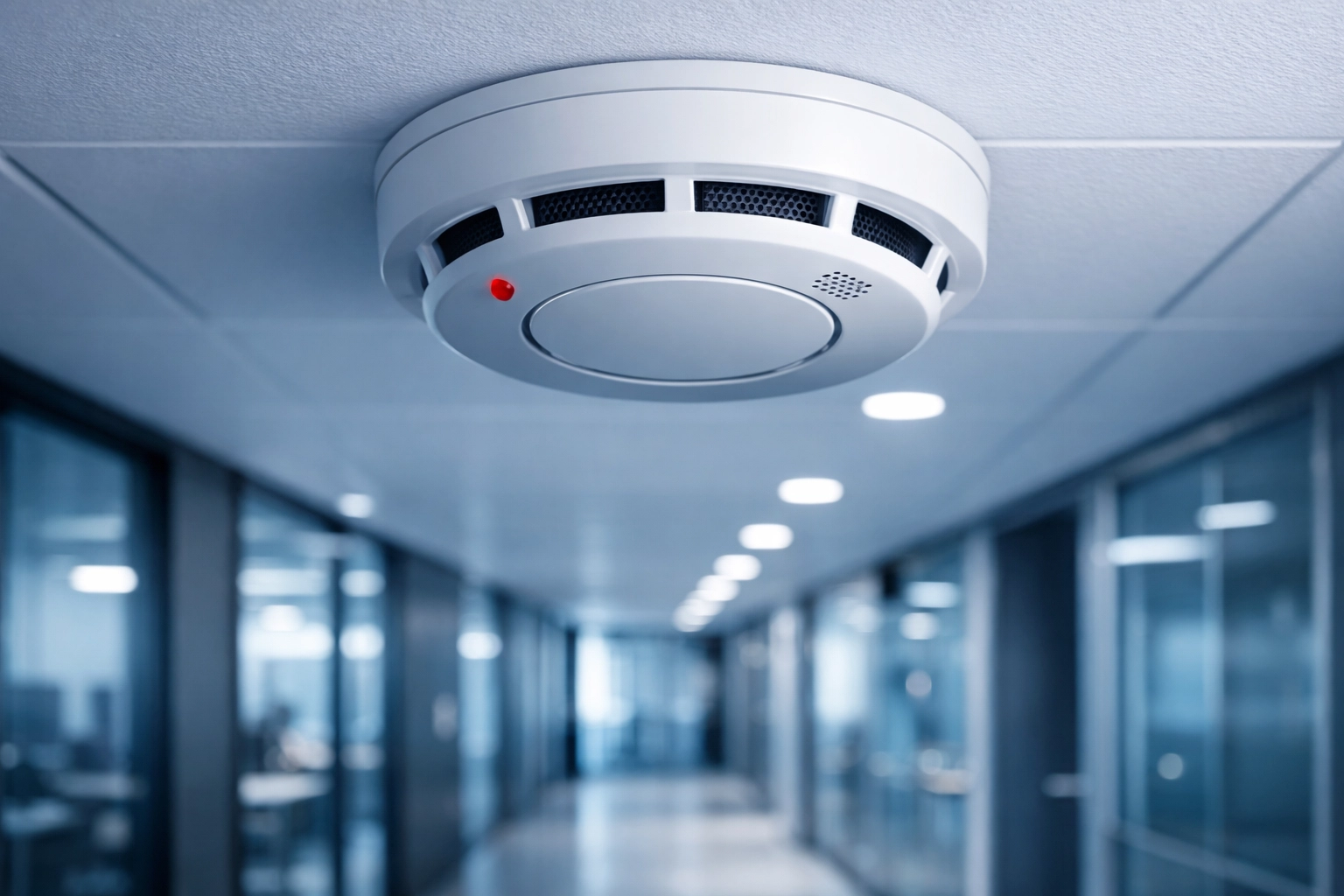
Understanding the Three System Categories
BS 5839-1:2025 classifies fire alarm systems into three distinct categories, each serving different protection objectives:
Category L (Life Protection Systems) provide automatic fire detection designed to protect occupants. These systems subdivide into five subcategories (L1 through L5), with varying coverage requirements:
- L1 requires detection throughout the entire building
- L2 provides coverage in defined areas plus escape routes
- L3 focuses on escape routes only
- L4 covers common areas in multi-occupancy buildings
- L5 offers detection in specific high-risk locations
The 2025 update mandates that L4 systems now include detection at the top of lift shafts, while L2 systems must specifically consider areas where occupants sleep: a critical addition for mixed-use developments.
Category P (Property Protection Systems) prioritise safeguarding building contents, inventory, and structural elements rather than occupant safety. These systems typically activate earlier in a fire's development to minimise damage.
Category M (Manual Systems) rely entirely on occupant activation through manual call points, offering the most basic level of fire detection suitable only for low-risk environments with constant occupancy.

Critical Updates for 2025: What's Changed
Signal Transmission Timing Requirements
Perhaps the most operationally significant change concerns signal transmission to alarm receiving centres. Category L systems must now transmit fire alarm signals within 90 seconds and fault signals within 3 minutes. Category P systems receive slightly extended allowances: 120 seconds for fire signals and 31 minutes for faults.
These stringent timing requirements eliminate the ambiguity that previously existed, creating clear performance benchmarks for monitoring connections. Businesses relying on older analogue telephone lines may find these requirements challenging to meet, necessitating upgrades to IP-based or dual-path communication systems.
Modern wireless fire alarm systems, such as those utilising Ajax technology, inherently meet these requirements through integrated internet connectivity via Ethernet, Wi-Fi, and dual SIM configurations, ensuring reliable, rapid signal transmission even if primary connections fail.
Zone Plans Now Mandatory
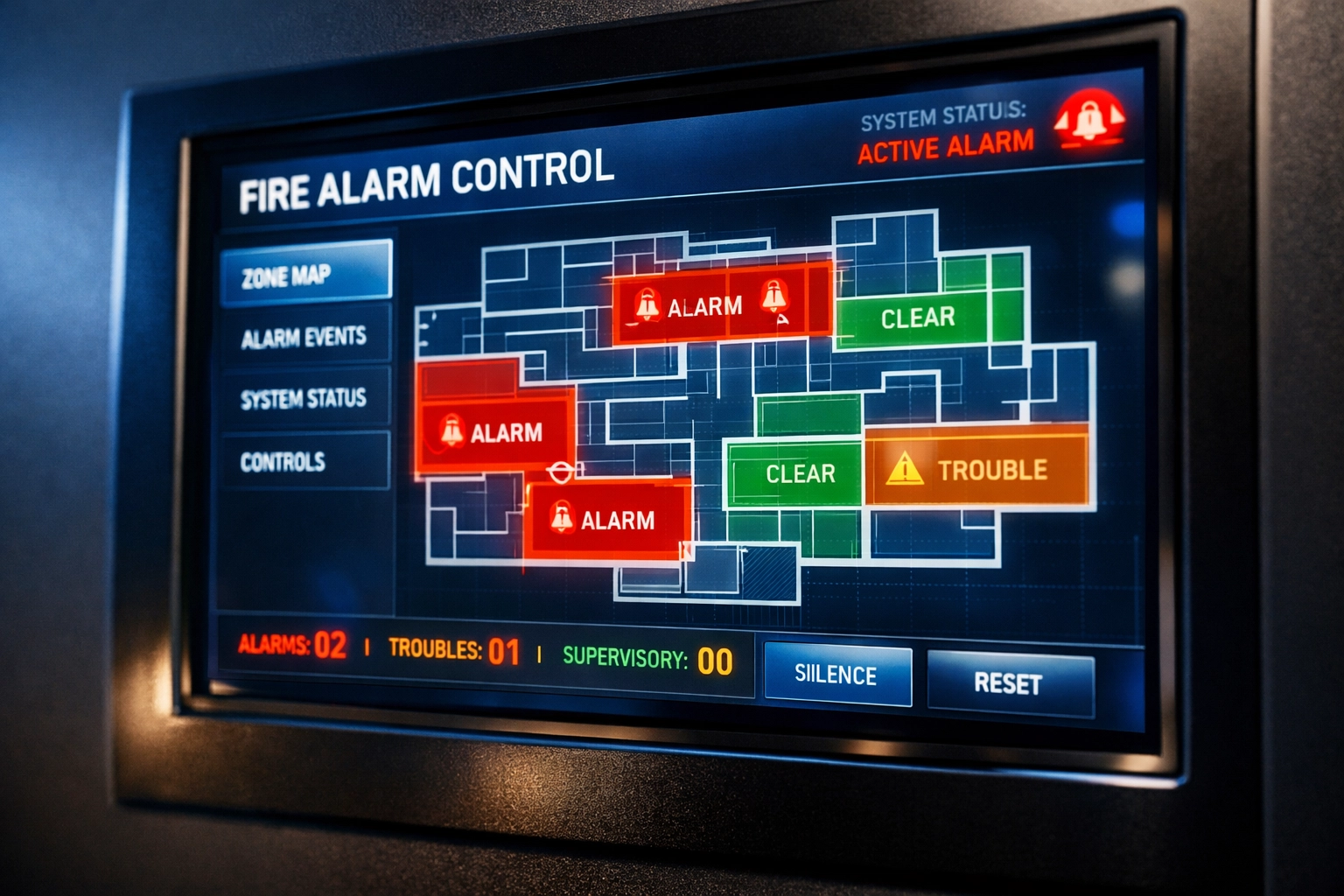
The 2025 revision elevates zone plans from recommended practice to essential documentation. Omitting a zone plan now constitutes an unacceptable variation from the standard, particularly in multi-zone premises where fire service response depends on accurate location information.
Zone plans must clearly indicate detector locations, manual call point positions, and the physical areas each zone covers. This documentation proves critical during emergency response and system maintenance, yet many existing installations lack adequate zone mapping: a deficiency that must now be addressed.
Physical Equipment Requirements
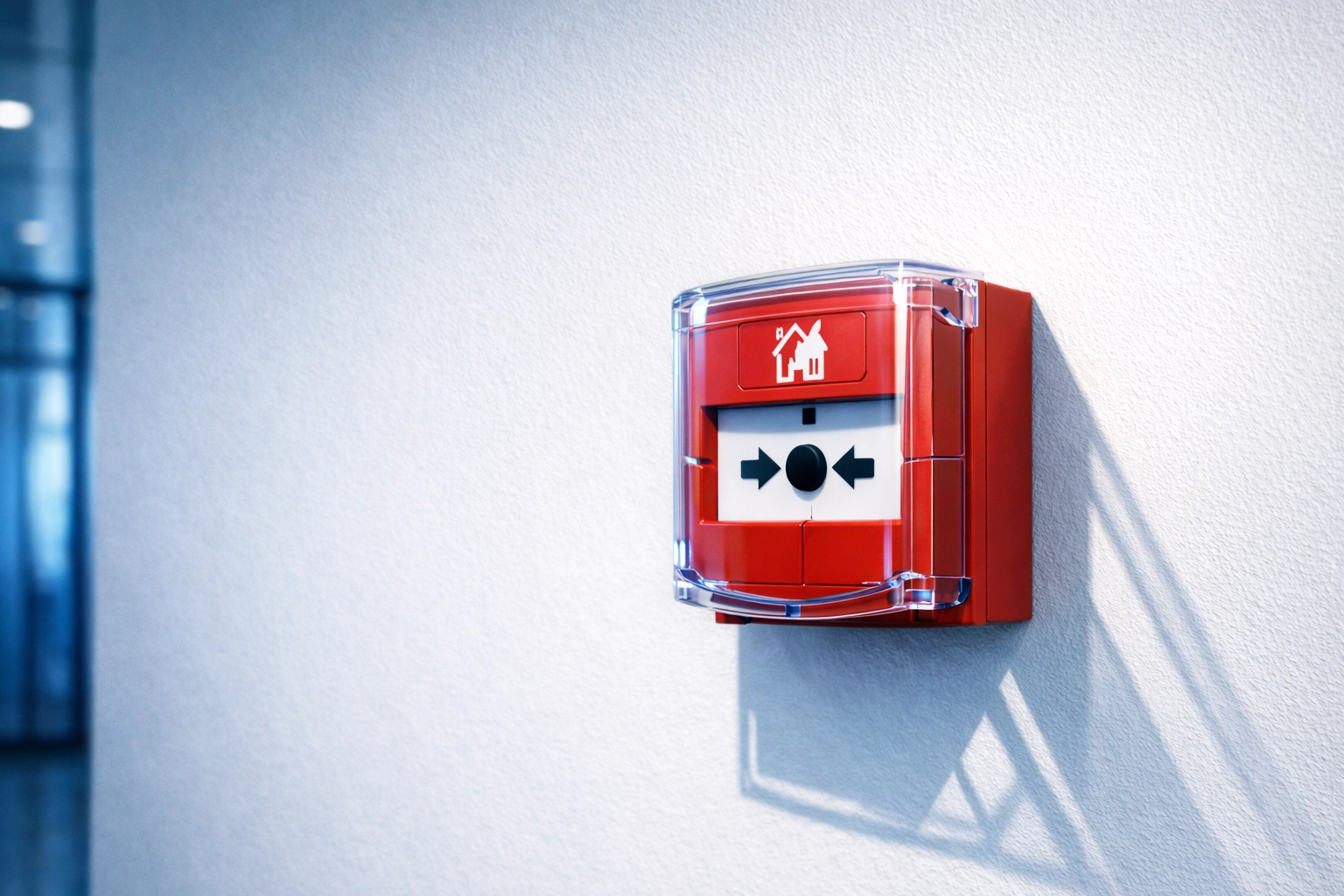
Transparent protective covers are now mandatory on all manual call points. This requirement addresses the persistent issue of accidental activations in high-traffic areas, particularly where equipment is positioned near doors, lifts, or busy corridors. The transparent design maintains the visibility of the activation mechanism while providing physical deterrence against unintentional operation.
Control panels connected to emergency services monitoring must now display false alarm warnings. These notices serve to remind occupants of the consequences of false alarms, which consume fire service resources and may result in charging penalties under some local authority policies.
Fire-resistant cabling requirements have been extended throughout the entire system, including mains supply cables. All fire alarm circuit cables must now be distinctly identified in red, creating immediate visual recognition during installation, maintenance, and emergency situations. This standardisation eliminates confusion about which cables form part of the life safety system.

The Competent Person Definition
BS 5839-1:2025 introduces substantially more rigorous requirements for personnel competency. The previous standard's relatively loose interpretation of "competent" has been replaced with explicit qualifications:
Only individuals with relevant formal training, current industry certifications, and documented ongoing professional development may design, install, commission, or maintain fire alarm systems. This change directly addresses concerns about quality standards across the industry, where unqualified contractors have occasionally undertaken work beyond their capabilities.
For building owners, this means verifying that service providers hold appropriate third-party certifications such as BAFE SP203-1 or equivalent qualifications. Documentation of technician competency should be requested and retained as part of compliance records.
Digital Logbooks and Documentation
While not explicitly mandated, the 2025 revision strongly encourages digital documentation systems for recording tests, inspections, and maintenance activities. Traditional paper logbooks present numerous challenges:
- Loss or damage eliminates historical compliance evidence
- Illegible entries create ambiguity during audits
- Missed tests may go unnoticed without automated reminders
- Accessibility limits remote management capabilities
Digital logbook systems, increasingly integrated with modern wireless fire alarm platforms, provide timestamped, tamper-evident records accessible to building managers, service providers, and enforcement authorities. These systems can automatically flag overdue tests and generate compliance reports, transforming fire safety record-keeping from administrative burden to strategic oversight tool.
What This Means for Your Business
Building owners and operators face several immediate implications from the 2025 standard updates:
Existing systems require compliance reviews to identify gaps against new requirements. Manual call point covers, zone plan documentation, and cabling identification represent straightforward upgrades. Signal transmission timing may necessitate communication infrastructure improvements.
Service contracts warrant scrutiny to ensure providers demonstrate competent person credentials under the updated definition. Requesting evidence of technician qualifications and third-party accreditation protects organisations from liability associated with substandard work.
Wireless fire alarm technology offers compelling advantages for businesses facing compliance upgrades. Ajax systems, for example, provide inherent advantages including integrated monitoring connectivity, digital event logging, and installation speeds that minimise operational disruption: particularly valuable in retail units and occupied commercial premises where traditional cabling creates extended downtime.
Documentation practices must evolve beyond basic logbook maintenance to comprehensive records demonstrating ongoing compliance. Digital systems streamline this requirement while providing evidence demanded by insurers, enforcement authorities, and due diligence processes.
Key Takeaways
BS 5839-1:2025 represents a maturation of fire detection standards, eliminating ambiguities and establishing clear performance benchmarks. The standard's focus on evacuation strategy support creates more purposeful system design, while competency requirements protect building owners from inadequate service providers.
Businesses should prioritise compliance reviews of existing installations, particularly regarding signal transmission capabilities, zone documentation, and equipment upgrades. Engaging with certified fire safety specialists ensures that systems meet both current standards and future regulatory expectations.
The convergence of wireless technology with updated compliance requirements presents an opportunity: businesses can address regulatory obligations while simultaneously gaining operational benefits through faster installation, enhanced monitoring, and superior documentation capabilities.
Fire safety compliance need not be complex. Understanding the fundamental changes in BS 5839-1:2025 enables informed decisions about system upgrades, maintenance contracts, and long-term fire safety strategies.
For guidance on ensuring your fire alarm systems meet the latest BS 5839-1:2025 requirements, GRB Compliance Services provides expert consultation, installation, and maintenance services across the UK.