
Houses in Multiple Occupation (HMOs) present unique fire safety challenges that demand rigorous attention from landlords. With multiple tenants, shared facilities, and complex evacuation requirements, HMOs face significantly higher fire risks than standard residential properties. The Fire Safety (England) Regulations 2022 have reinforced landlord responsibilities, making it essential to understand and implement comprehensive fire safety solutions in 2026.
This guide outlines the critical fire safety checks every HMO landlord must perform to maintain compliance, protect tenants, and avoid substantial penalties from local authorities.
Mandatory Fire Risk Assessments
Every HMO requires a professional fire risk assessment, regardless of licensing status. Under the Regulatory Reform (Fire Safety) Order 2005, landlords must commission assessments by competent, qualified professionals who understand the specific hazards present in multi-occupancy environments.
A comprehensive fire risk assessment identifies:
- Ignition sources – electrical equipment, cooking facilities, heating systems, and other potential fire starters
- Fuel sources – combustible materials, furnishings, and storage areas that could accelerate fire spread
- Vulnerable occupants – elderly residents, individuals with mobility issues, or those requiring assistance during evacuation
- Existing fire precautions – current detection systems, escape routes, fire doors, and emergency lighting
- Required improvements – specific actions needed to achieve acceptable safety standards
Fire risk assessments must be reviewed at minimum annually or whenever tenancy changes occur: whichever comes first. Landlords don't need complete rewrites each year; documenting the review date and updating action items suffices for properties where conditions remain largely unchanged.

HMO Fire Alarm Requirements: Understanding BS 5839
HMO fire alarm requirements vary based on property size, layout, and risk profile, but all systems must meet British Standards. BS 5839-6 covers residential fire detection and alarm systems, establishing minimum standards for different property types.
Most HMOs require:
- Interlinked smoke alarms in circulation spaces, rooms leading to circulation spaces, and rooms presenting significant fire risk
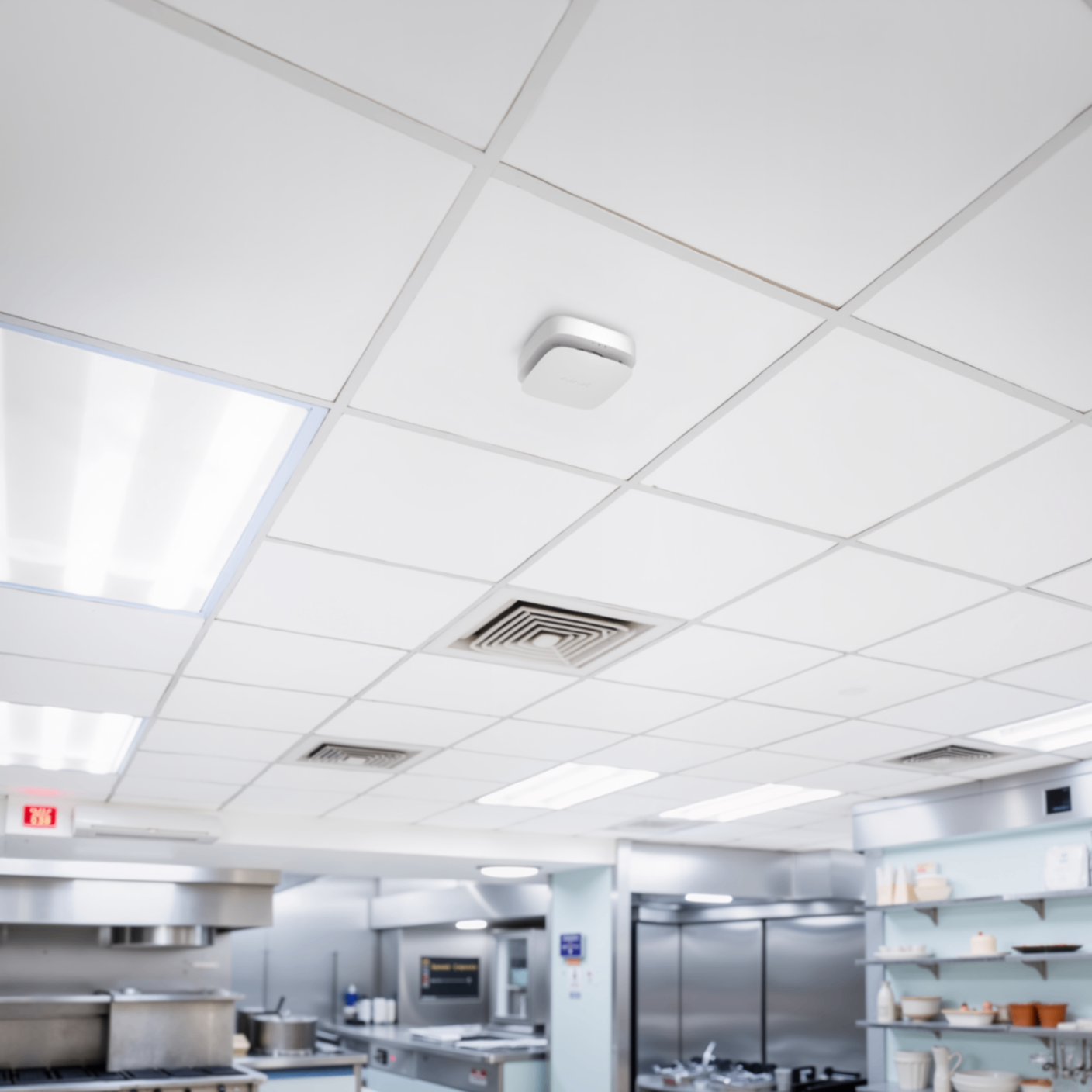
- Heat detectors in kitchens where smoke alarms would generate false alarms
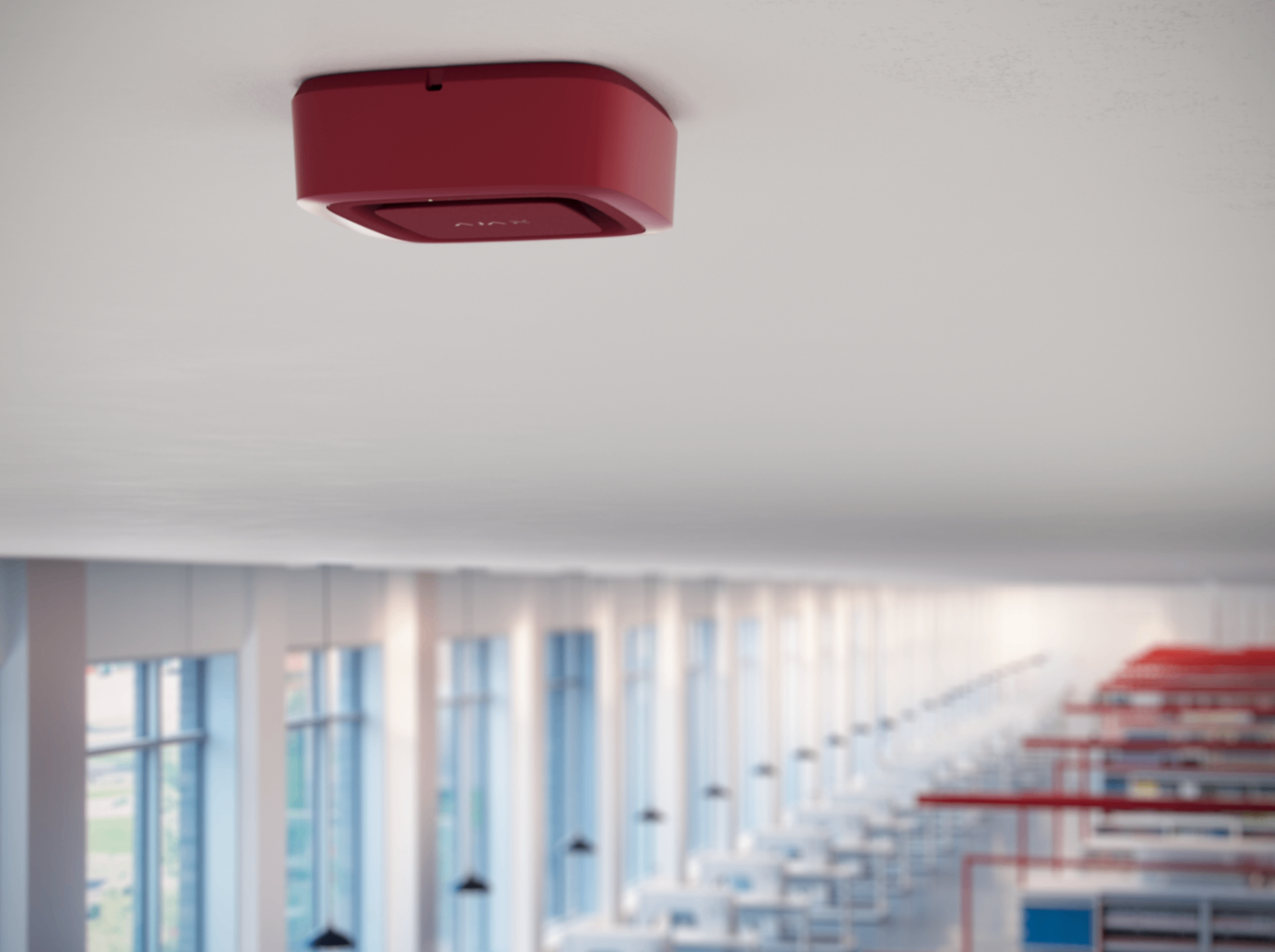
- Manual call points positioned at exit routes in larger HMOs
- Sounder coverage ensuring all occupants can hear the alarm regardless of location
Larger or higher-risk HMOs may require BS 5839-1 compliant systems: commercial-grade fire detection with centralized control panels, sophisticated detection zones, and comprehensive monitoring capabilities. These systems provide superior reliability and faster emergency response compared to standard residential alarms.
Modern Wireless Solutions: AJAX EN54 Systems
Traditional hardwired fire alarm installations often prove impractical in existing HMO properties where extensive cable runs disrupt operations and incur significant costs. Wireless fire alarm systems offer compelling alternatives, particularly when properties require upgrades to meet current HMO fire alarm requirements.
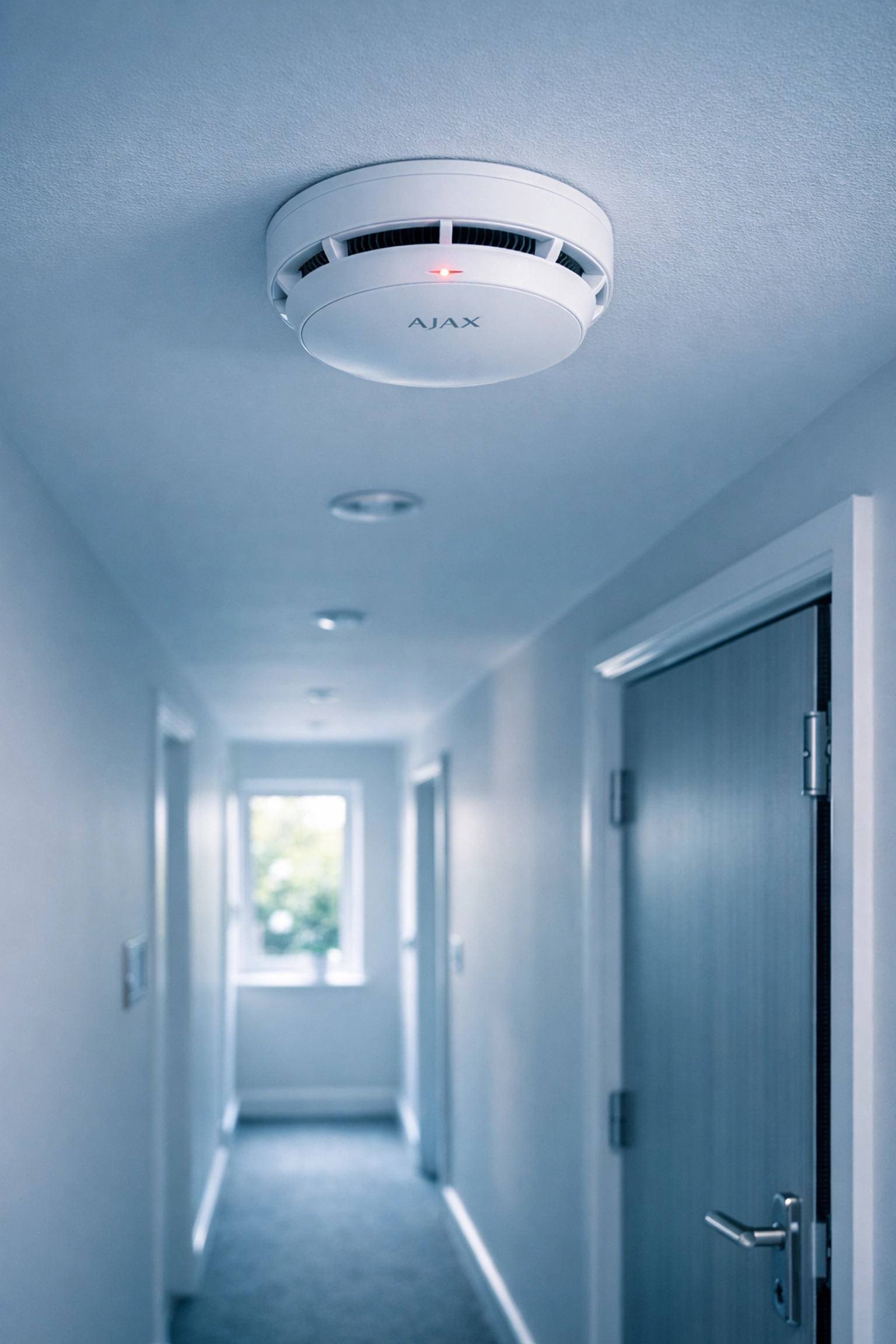
AJAX EN54-certified wireless fire detection systems deliver commercial-grade performance with residential installation simplicity. These systems feature:
- Grade 2 certification meeting EN54 European standards for fire detection
- Encrypted wireless communication preventing interference and maintaining signal integrity
- Extended battery life reducing maintenance frequency and operational costs
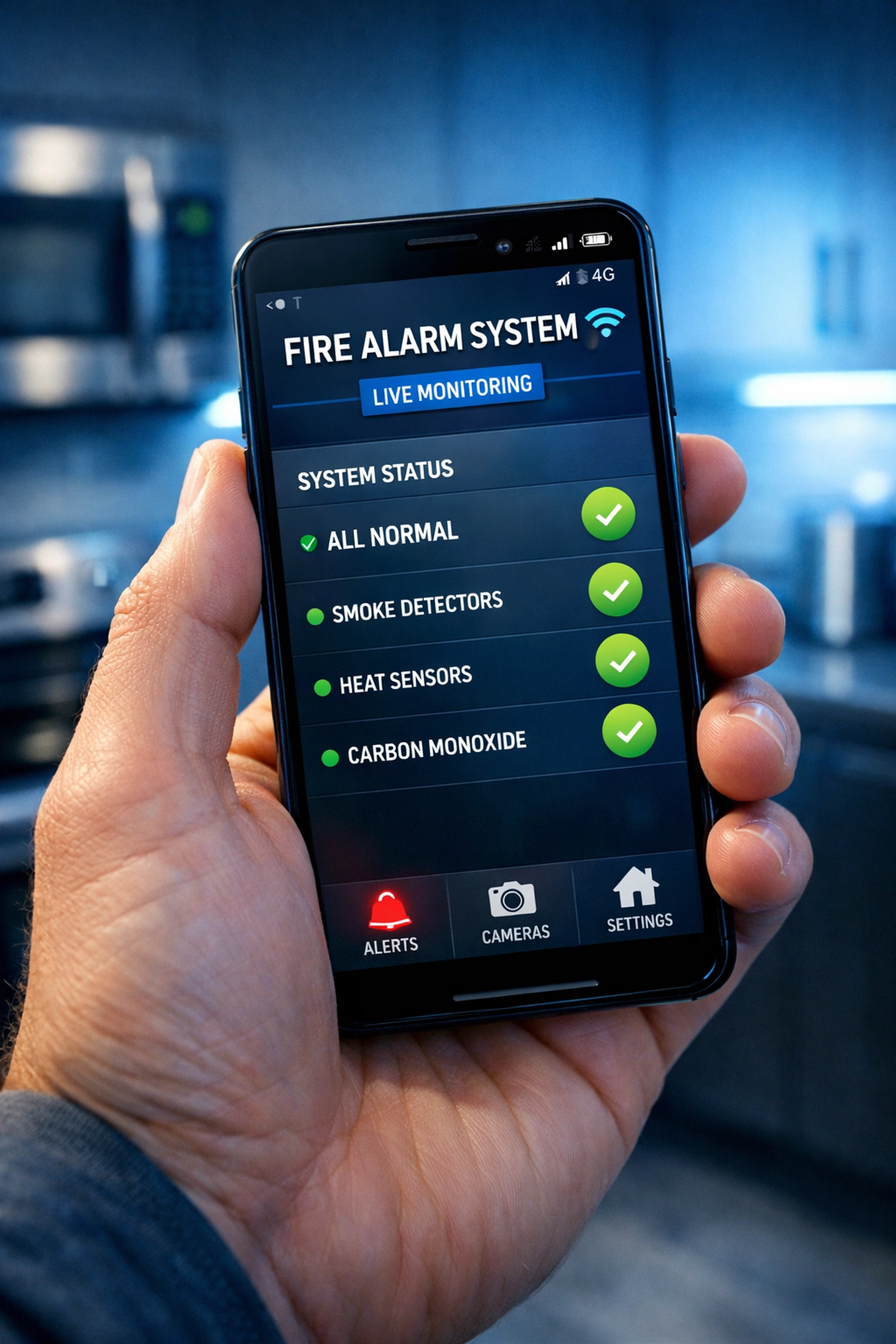
- Real-time monitoring via central hubs that immediately alert landlords to system faults or activations
- Scalable architecture allowing system expansion as property requirements evolve
For HMO landlords managing multiple properties, AJAX systems integrate seamlessly across portfolios, providing centralized monitoring and simplified BS5839 maintenance protocols across diverse building types.
Fire Door Compliance and Quarterly Inspections
Fire doors represent critical components in HMO fire safety strategies, providing compartmentation that contains fire spread and protects escape routes. Landlords must conduct quarterly inspections on fire doors within common areas and annual inspections on doors serving individual dwellings.
Essential fire door checks include:
- Intumescent strips – heat-activated seals that expand during fire exposure, closing gaps around door edges
- Cold smoke seals – additional seals preventing smoke infiltration under normal conditions
- Self-closing mechanisms – door closers maintaining positive closure without occupant intervention
- Intact vision panels – fire-rated glazing free from cracks or damage
- Signage – "Fire Door Keep Shut" notices clearly visible on both faces
- Frame integrity – secure fixings, undamaged frames, and proper alignment
Common failures include:
- Damaged or missing intumescent strips following painting or maintenance
- Door closers adjusted incorrectly or disconnected by occupants
- Doors wedged open with furniture or door stops
- Gaps exceeding 3mm around door perimeters
Landlords must address fire door defects immediately: compromised fire doors provide false security that dramatically increases life risk during actual fire events.
Tenant Fire Safety Information
Landlords must provide comprehensive fire safety instructions to all HMO occupants, displayed prominently where residents regularly see them. These instructions require specific information:
Evacuation strategy – whether the property employs simultaneous evacuation (everyone leaves immediately) or stay-put policies (applicable only in purpose-built blocks with proper compartmentation). Most HMOs require simultaneous evacuation given their conversion origins and shared escape routes.
Emergency contact procedures – clear directions on reporting fires, which emergency number to call (999 in all cases), and how to activate manual call points if installed.
Fire door protocols – explicit instructions that fire doors must remain closed when not in use, that self-closing mechanisms must not be tampered with, and that any damage requires immediate reporting to landlords.
Personal safety actions – guidance on evacuation procedures, assembly points, and what occupants should and shouldn't attempt during fire emergencies.
Landlords must issue these instructions immediately when new residents move in and reissue them to all current occupants at least annually. Documentation proving instruction distribution protects landlords during compliance audits and demonstrates due diligence.
Fire Alarm Testing and BS5839 Maintenance
Regular fire alarm testing ensures systems remain operational when needed most. HMO fire alarm requirements mandate weekly testing by responsible persons (often landlords or managing agents) and comprehensive annual servicing by qualified technicians.
Weekly tests involve:
- Activating different call points or detectors each week
- Confirming all sounders activate across the property
- Verifying interlinked alarms communicate properly
- Documenting tests in fire safety logbooks
Annual BS5839 maintenance by competent engineers includes:
- Component testing using specialist equipment that simulates smoke or heat
- Battery health verification ensuring backup power remains adequate
- Interlink confirmation testing wireless or hardwired connections between devices
- Expiry date checks identifying detectors approaching 10-year replacement intervals
- False alarm investigation determining causes of nuisance activations
- Certificate issuance providing documented evidence of system compliance
Neglecting fire alarm testing represents a common compliance failure. Local authorities conducting HMO inspections specifically request test records, and gaps in documentation can trigger enforcement action regardless of whether systems remain functional.
Additional Requirements for Taller HMOs
Properties exceeding 11 metres height face additional fire safety obligations under recent regulatory changes. These include:
- Premises Information Box (PIB) – secure external boxes containing building plans, emergency contact information, and details about fire safety systems
- Wayfinding signage – photoluminescent signs remaining visible in smoke-filled conditions
- Monthly equipment checks – more frequent inspections of fire-fighting equipment and evacuation provisions
- Enhanced record-keeping – comprehensive documentation of all fire safety measures, tests, and maintenance activities
While fewer HMOs reach these heights compared to purpose-built blocks, landlords with taller conversions must understand these enhanced requirements apply equally to all building types meeting the height threshold.
Fire Safety Equipment: What's Actually Required?
Fire extinguishers are not mandatory in HMOs unless fire risk assessments specifically identify their necessity. Current guidance emphasizes that occupants should evacuate, call emergency services, and stay out rather than attempting firefighting. However, fire blankets in kitchens provide practical safety measures that quickly smother pan fires by cutting oxygen supply: the most common fire scenario in residential settings.
Landlords should resist the temptation to over-provision equipment that creates maintenance burdens without delivering meaningful safety improvements. Focus instead on robust detection, clear escape routes, and proper compartmentation: the fundamentals that actually save lives during HMO fire incidents.
Key Takeaways for HMO Landlords
Compliance with HMO fire alarm requirements and broader fire safety obligations demands systematic approaches rather than reactive responses to enforcement notices. Landlords who establish comprehensive maintenance schedules, maintain detailed documentation, and engage qualified professionals for assessments and servicing consistently outperform those taking minimum-effort approaches.
Modern fire safety solutions: particularly wireless systems meeting BS 5839 and EN54 standards: offer practical paths to compliance in existing properties where traditional installations prove disruptive or cost-prohibitive. These systems deliver commercial-grade protection with installation flexibility that aligns with HMO operational realities.
The regulatory landscape continues evolving, with Building Safety Act provisions introducing additional landlord responsibilities throughout 2025 and beyond. Staying ahead of requirements rather than scrambling to catch up protects both tenant safety and business viability.
For landlords managing HMO portfolios, partnering with specialist fire safety providers ensures access to current expertise, compliant system design, and reliable maintenance support that reduces administrative burden while maintaining rigorous safety standards. Proactive fire safety management ultimately proves less expensive and considerably less stressful than reactive compliance following enforcement action or, worse, actual fire incidents.